One Invisible Byte: The Bell Labs Decision That Still Haunts Every Machine on Earth
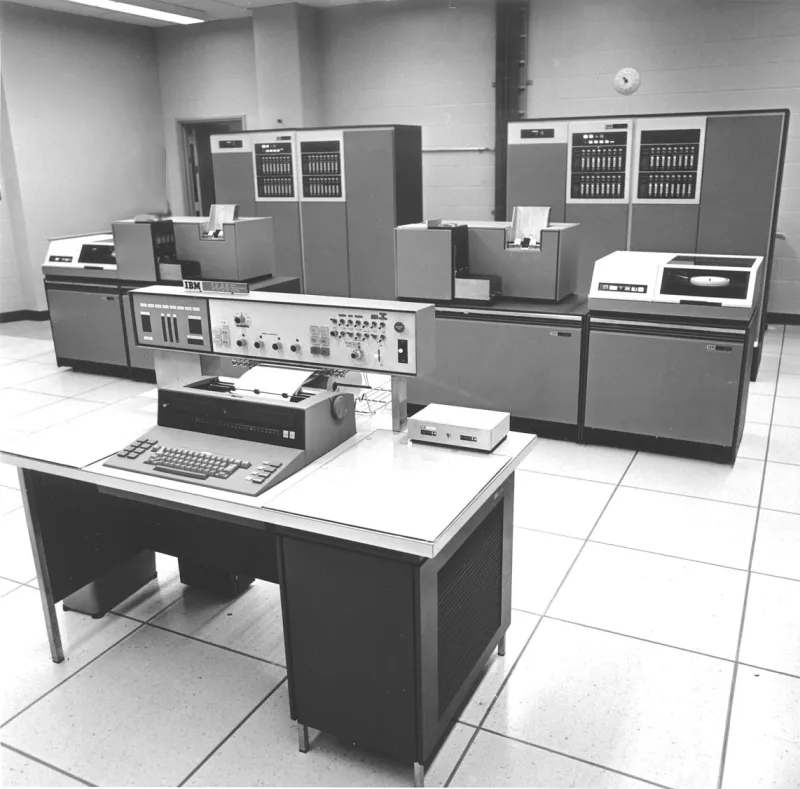
Photo: vintage 1970s mainframe computer terminal Bell Labs era, via memorial.bellsystem.com
Every so often, a design decision is so small, so reasonable, so utterly defensible in the moment, that its consequences take fifty years to fully appreciate. The null terminator is the reigning champion of this category. One byte. Value zero. Invisible in every sense. And responsible for a meaningful share of the security disasters of the modern era.
This is, fittingly for this website, the story of the character in our own name. We are NullTerminator, and we come to praise the zero byte, not to bury it. Although honestly, we'd also like to bury it.
The Fateful Trade
To understand the decision, you have to understand the constraints of the era. When C was being shaped at Bell Labs in the late 1960s and early 70s, memory was astronomically expensive and processors were glacial. Every byte of overhead mattered.
There were two ways to represent a string of text:
- Store the length alongside the characters, so the string knows how long it is.
- Append a sentinel value — a zero byte — after the last character, and let functions scan until they find it.
Option one costs extra storage and extra bookkeeping. Option two costs exactly one byte and zero bookkeeping. Under the hardware constraints of the time, option two was the obviously correct choice. The null terminator wasn't a mistake. It was a rational optimization, made by smart people, under real constraints.
The problem is that option two contains a hidden assumption that would poison software for half a century: that someone, somewhere, will always remember to put the zero there, and that every function that touches a string will trust that the zero is there.
The Assumption Meets Reality
The null terminator outsources memory safety to programmer discipline. And programmer discipline, as a security model, has about the same track record as leaving your front door unlocked because you're "pretty sure" you locked it.
The failure mode is beautifully simple. A buffer is allocated for N characters. A string of M characters gets copied in, where M is greater than N. The zero byte doesn't fit. So it isn't written. And now every downstream function that scans for the terminator keeps reading — past the end of the buffer, into adjacent memory, into whatever happens to live there. This is the buffer overflow, arguably the most exploited class of vulnerability in computing history.
The consequences read like a greatest-hits album of digital crime:
- The Morris Worm of 1988, the first great internet worm, used a buffer overflow in
fingerdto propagate. It took down a meaningful fraction of the early internet in a weekend. - Code Red in 2001 exploited an overflow in Microsoft's web server, defacing websites and scanning the internet at industrial scale.
- Countless overflow-based exploits in operating systems, browsers, routers, and everything else built on C-derived string handling.
The economic toll of buffer overflows alone is estimated in the billions of dollars annually — patching costs, breach remediation, stolen data, downtime. All of it traces back, in large part, to a convention chosen because a byte of memory was expensive in 1972.
The Zero Byte as a Weapon
Here's where it gets genuinely strange: attackers learned to weaponize the terminator itself. Enter the poison null byte technique, popularized in the late 1990s. Because the zero byte means "end of string" to some parts of a system but is just ordinary data to others, an attacker could smuggle %00 into input and cause two components to disagree about where a string ends.
Picture a web server checking that a requested file ends in .jpg. The check passes. Then the terminator tricks the filesystem call into ignoring everything after a %00 embedded in the request — and suddenly you're reading files you were never supposed to see. The same byte is simultaneously a terminator and a payload. It's a design flaw performing a magic trick, and the magic trick is a security breach.
The Long, Slow Retreat
To be fair to the null terminator's creators, the industry has spent decades trying to contain their decision without breaking the world built on top of it:
- Safer string libraries (
strncpy,strlcpy, and friends) that always write the terminator — bandages over the wound, occasionally introducing new bugs of their own. - Compiler hardening like stack canaries and Address Space Layout Randomization, which don't prevent overflows but make them harder to exploit.
- Memory-safe languages — Java, C#, Go, Rust — that store string lengths explicitly, the same idea the null terminator beat out in 1972. Rust's refusal to permit out-of-bounds access is, in a real sense, a fifty-year correction of a single design trade.
- The US government's Cybersecurity and Infrastructure Security Agency now explicitly urges developers toward memory-safe languages, an official acknowledgment that the C string model has a body count.
The zero byte won the 1970s on efficiency and is losing the 2020s on safety. That transition — slow, expensive, incomplete — is one of the great migrations in software history, and it's happening because of one byte.
The Lesson Worth Keeping
Nobody at Bell Labs made a bad decision. They made a good decision for their era, and the era ended, and the decision outlived its justification by decades. That's the actual lesson here, and it's bigger than strings.
Every optimization embeds an assumption. Every assumption has a shelf life. The null terminator's assumption — that humans will always check, and memory is too expensive to waste on bookkeeping — expired quietly sometime in the 1990s, and the software world is still paying the tab.
So the next time you see a CVE write-up about an out-of-bounds write, pour one out for the invisible byte. It was born in a lab in New Jersey, it conquered the world, and it never once told anyone where it ended.