Nested to the Point of No Return: A Field Guide to Callback Purgatory
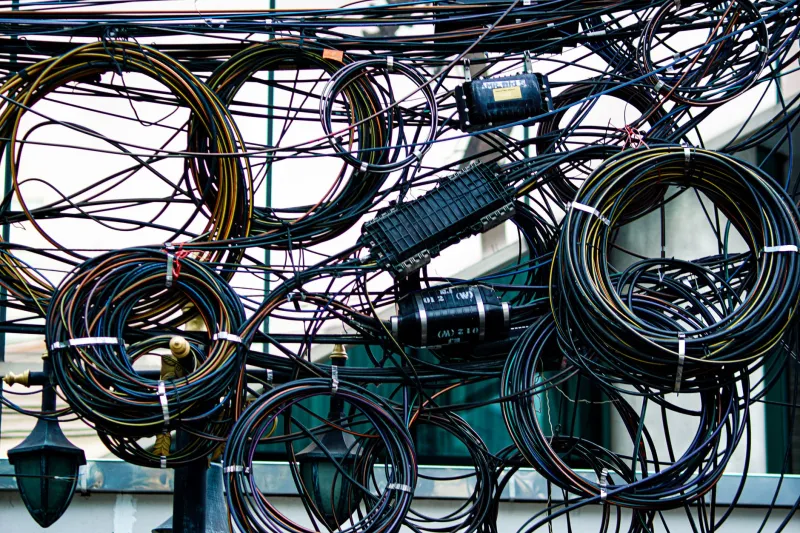
There is a specific kind of grief that only a JavaScript developer knows. It arrives quietly, usually around 11 PM on a Tuesday, when you're scrolling right — right, not down — through a function that has achieved a level of nesting previously only seen in Russian dolls and congressional tax code. You didn't mean for it to get this way. Nobody ever does.
Welcome to callback hell. Population: everyone who ever thought, "I'll just handle this asynchronously real quick."
How Did We Get Here? (A Brief Eulogy for Your Architecture)
It starts innocently enough. You need to fetch some data. Then you need to do something with that data. Then you need to do something with the result of that thing. Before you know it, you've got a pyramid of doom so structurally impressive that archaeologists from the future will study it as a monument to human hubris.
Reader submissions to NullTerminator have been illuminating in the darkest possible way. One developer — who asked to remain anonymous for reasons that will become obvious — shared a function that had eleven levels of nesting. Eleven. The function handled a user login flow for an e-commerce site. At depth seven, there was a comment that simply read: // God help us. At depth nine, the comment read: // He didn't.
Another reader described inheriting a Node.js codebase where a single API endpoint callback chain was so long that the team had adopted a naming convention just to keep track: callback1, callback2, callbackFinal, callbackActuallyFinal, callbackThisIsReallyItISwear. It was not, in fact, it.
The Diagnostic Checklist (Or: Does Your Code Need a Priest?)
Before we prescribe treatment, we need to assess severity. Ask yourself the following:
Level 1 — Mild Concern: Your function is indented more than four levels deep. You feel vaguely uneasy but can still explain what it does to a colleague without crying.
Level 2 — Active Problem: You've started naming anonymous functions because you lost track of which closing brace belongs to which callback. Your editor's bracket-matching highlight has become your primary navigation tool.
Level 3 — Clinical Intervention Required: You have written a callback inside a callback inside a setTimeout inside a forEach inside a callback. You refer to this section of the codebase as "the bad place." New developers who open this file do not return the same.
Level 4 — Exorcism, Not Refactor: The code works. You do not know why. You are afraid to touch it. There is a comment from three years ago that says DO NOT REFACTOR with no further explanation. The developer who wrote it is no longer at the company. Nobody knows how to reach them. You have started to suspect they left because of this function.
If you identified with Level 3 or 4, close this tab, open a new branch, and keep reading.
Escape Routes That Actually Work
The good news — and there is good news, despite everything — is that the JavaScript ecosystem eventually looked at callback hell and said, "Yeah, we should probably fix that." The solutions exist. They are mature. They work. Using them does not make you a sellout.
Promises were the first real lifeline. Instead of passing callbacks into callbacks, you chain .then() calls in a linear sequence that a human being can actually read from top to bottom, like a normal document written by a person with reasonable intentions. Error handling consolidates into a single .catch(). Your code stops looking like a tax return and starts looking like a recipe.
Async/Await took promises and wrapped them in syntax so clean it almost feels suspicious. You write asynchronous code that reads synchronously. You use try/catch like it's 2010 and you're writing Java and everything is fine. This is not a trick. It genuinely works, and it will make you feel things.
A word of caution: async/await doesn't eliminate the underlying complexity, it just hides it behind a friendlier face. Forgetting to await something is its own special category of bug — one that fails silently, intermittently, and exclusively in production at 2 AM.
Promise.all() deserves a special mention for the developers who replaced sequential callback chains with parallel async operations and then stood back and watched their app become three times faster, feeling like absolute geniuses. You earned that feeling. Take it.
The Refactor You've Been Avoiding
Here's the uncomfortable truth about callback hell: it doesn't get better on its own. The pyramid does not flatten through prayer or the passage of time. Every new feature request is another layer of indentation, another closing brace in search of an opening, another anonymous function that future-you will read like a ransom note.
The refactor is scary because the code works. Touching it feels like defusing a bomb with instructions written in a language you don't speak. But leaving it is scarier, because every developer who opens that file loses a little piece of their soul, and eventually you run out of developers willing to open it at all.
Start small. Extract one inner callback into a named function. Make it return a promise. Run the tests. If nothing explodes, do it again. Repeat until you can read the entire function without needing to scroll right, without needing a map, without needing to explain to your therapist why you've started having dreams about closing braces.
A Note on Solidarity
If you are currently living inside a callback hell codebase, know that you are not alone. Some of the best developers in the industry have been exactly where you are, staring at a function that has achieved architectural complexity rivaling the human nervous system, wondering if the right move is to refactor or simply to walk into the ocean.
Refactor. Always refactor.
The ocean will still be there when you're done.