Field Notes From the Digital Cretaceous: Surviving a Decade-Old Codebase
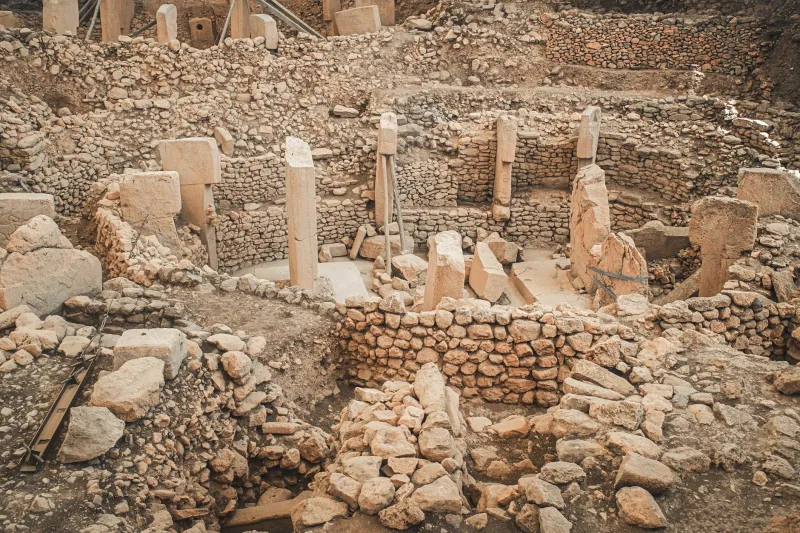
SITE DESIGNATION: /src/legacy/core/
EXCAVATION DATE: Present day, unfortunately
LEAD INVESTIGATOR: You. Against your will.
The repository was handed to you on a Tuesday, which is already suspicious. Nobody delivers good news on a Tuesday. Your manager said the words "well-documented" and "mostly stable" in the same breath, which, in the archaeological record of corporate promises, ranks somewhere between "the project ships next quarter" and "we just need a few small changes."
You cloned it. You opened it. You stared into the abyss, and the abyss had a last commit date of April 2014.
Welcome to the dig.
Stratigraphy of Suffering: Reading the Layers
A seasoned codebase archaeologist — and yes, that is what you are now, update your LinkedIn — learns to read temporal strata the way a geologist reads canyon walls. Each layer tells a story. Each layer also raises approximately seventeen new questions.
The deepest stratum, circa the Obama first term, is where you find the truly primordial stuff: raw SQL strings concatenated directly into function calls, variable names like data2, data2_final, and the haunting data2_final_REAL, and a comment that simply reads // don't touch this. No explanation. No context. Just a warning, floating in the void like a cursed fortune cookie.
Above that, you can identify what archaeologists might call the Agile Awakening Layer — a period somewhere around 2015-2016 where someone clearly attended a conference. The functions get shorter. There's a half-hearted attempt at something resembling MVC. A folder called refactor/ exists, containing exactly one file, untouched since its creation. The ambition is palpable. The follow-through is not.
Then comes the Framework Migration Sediment — thick, confusing, and almost certainly the source of that one bug nobody can reproduce in staging but which detonates in production every third full moon. Two competing approaches exist side by side, like two ancient civilizations who agreed to share a continent and then immediately stopped speaking.
The Fossil Record: Artifacts of Developers Past
Every legacy codebase is, at its heart, a memorial. Not a flattering one, but a memorial nonetheless.
Consider the commented-out block. Not one commented-out block — hundreds. Pages of deactivated code preserved in amber, accompanied by dates, initials, and sometimes emotional outbursts that would make a therapist reach for their notepad. // JT 08/22/2016 - removing this for now. Who was JT? Why did they leave? Are they okay? Did they escape?
Then there are the variable names. The legacy codebase is a masterclass in the hubris of assuming future developers will simply know. tempFlag. isReady2. x used as a loop counter, then repurposed six lines later as a coordinate, then multiplied by something called MAGIC_NUM which is defined in a constants file that also contains the company's original founding year for reasons that are never explained.
Most sacred of all: the lone semicolon on line 4,847 of a 5,000-line file, sitting by itself on an otherwise empty line, serving no syntactic purpose, connected to nothing. It has survived three Node version upgrades, two linters, and a full ESLint migration. Nobody removed it. Nobody will. It has earned its place. It is the codebase's mascot now.
Carbon Dating With Git Blame
git blame is the carbon dating of the software world, except instead of isotope decay rates, you're measuring the half-life of developer employment at a given company.
You run it on the most baffling section of the authentication module — a 200-line function that appears to do six different things, none of them authentication — and discover the commits span nine years, seventeen contributors, and what appears to be a brief period in 2018 where someone was clearly going through something personal based on their commit messages alone.
The original author left the company in 2015. Their GitHub profile now lists them as a "mindfulness app founder" in Austin, Texas. They have moved on. They have healed. You have not.
This is the cruelest part of legacy code archaeology: the people who made these decisions are living their best lives somewhere, probably at a standing desk, probably drinking oat milk, completely unbothered by the setTimeout they wrapped around an API call "just to give it a second to breathe."
The Ethics of the Dig: To Refactor or Not to Refactor
Every archaeologist must eventually confront the central ethical dilemma of their field: do you preserve the artifact, or do you modernize it?
In software, this translates to the ancient and cursed question: do I refactor this, or do I add a comment and keep moving?
The optimistic answer is refactor. Rewrite it clean. Apply the patterns you learned. Make it testable. Make it right.
The realistic answer is that you have a sprint deadline, the tests don't cover this module, and the last person who tried to "clean up just this one section" accidentally took down the payment processing service for four hours on a Friday afternoon. That developer now works in DevOps and has a haunted look in their eyes.
So you do what every archaeologist before you has done: you leave a comment. You describe what you found. You note the date. You add your initials. You move on.
You become the next layer of sediment.
Closing Field Notes
The legacy codebase is not a failure. It is evidence — messy, contradictory, sometimes horrifying evidence — that software got built. That deadlines were met, features shipped, and users served, even when the underlying architecture resembled a Jenga tower in a wind tunnel.
Every var where a const should be, every callback nested inside a callback inside a callback, every function named handleStuff — these are the footprints of people who were doing their best with what they had, under pressures you can only imagine, using tools that were themselves considered modern and reasonable at the time.
The semicolon that survived? It didn't survive despite the chaos. It survived because of it. It's still there, doing nothing, bothering nobody, outlasting frameworks and colleagues and entire companies.
There's a lesson in that. Probably. You're too deep in the codebase to see it clearly right now.
Add a comment. Date it. Keep digging.
NullTerminator: Where code ends and sanity begins. The dig site is always open.